Buy acnibo.eu ?
We are moving the project
acnibo.eu .
Are you interested in purchasing the domain
acnibo.eu ?
domain@kv-gmbh.de · 0541-91531010
Buy acnibo.eu ?
Why water bath?
A water bath is used in scientific experiments and cooking for several reasons: 1. Temperature control: Water has a high specific heat capacity, meaning it can absorb and retain heat well. This makes it an ideal medium for maintaining a constant temperature during an experiment or cooking process. 2. Gentle heating: Water bath provides a gentle and uniform heat source, which is important for delicate samples or ingredients that may be sensitive to high temperatures. 3. Prevents evaporation: By using a water bath, the water can act as a barrier to prevent evaporation of the sample or ingredients being heated. 4. Safety: Using a water bath can help prevent direct contact between the heat source and the sample, reducing the risk of overheating or burning. Overall, a water bath is a versatile and effective tool for maintaining precise temperatures and ensuring consistent results in various scientific and culinary applications. **
How can one create a water bath without a water bath container?
To create a water bath without a water bath container, you can use a regular cooking pot or a baking dish as the outer vessel. Fill it with water to about halfway up the sides of the dish you are using to hold the items you want to heat gently. Place a kitchen towel or a silicone trivet at the bottom of the pot to prevent direct contact between the dish and the heat source. This makeshift water bath can be used for tasks like melting chocolate, making custards, or gently heating delicate sauces. **

Similar search terms for Steinberg-Laboratory-Water-Bath
Top-Angebote
Products related to Steinberg-Laboratory-Water-Bath:
-
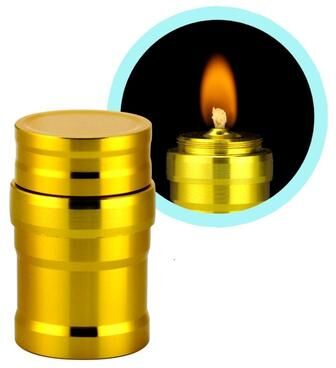
Inspired Deals Portable Mini Alcohol Lamp Metal Alcohol Burner For Camping And Laboratory Use Portable Mini Alcohol Lamp Metal Alcohol Burner For Camping And Laboratory UseBring reliable heat wherever you need it with this mini alcohol lamp designed for both outdoor adventures and precision tasks. Whether you're a camper, hobbyist, or student, this compact portable alcohol burner delivers a steady flame in a...39,97 $*Shipping: 0,00 $Secure redirect to the provider
-
How is the bath water made blue?
The bath water is made blue by adding a water-soluble dye or coloring agent to the water. These dyes are specifically designed to be safe for use in bath water and will not stain the skin or tub. The amount of dye added can be adjusted to achieve the desired shade of blue. Additionally, some bath products, such as bath bombs or bubble bath, may contain blue coloring agents that dissolve in the water, turning it blue. **
-
How is the bath water turned blue?
The bath water is turned blue by adding a blue-colored bath bomb or bath salts to the water. These products contain dyes or pigments that dissolve in the water, creating the blue color. As the bath bomb or salts fizz and dissolve, they release the colorant into the water, transforming it into a vibrant blue hue. **
-
How do I create a water bath?
To create a water bath, you will need a large baking dish or roasting pan that is big enough to hold the dish you want to cook in. Place the dish in the baking dish and fill the baking dish with hot water until it reaches about halfway up the sides of the dish you are cooking in. Then, carefully transfer the baking dish to the oven and proceed with your recipe as directed. This gentle, indirect heat will help to cook delicate dishes like custards and cheesecakes evenly and prevent them from curdling or cracking. **
-
How can one produce water in a laboratory?
Water can be produced in a laboratory through a process called synthesis, where hydrogen and oxygen gases are combined in the presence of a catalyst to form water. This can be achieved by passing an electric current through water to separate the hydrogen and oxygen, and then collecting and combining the gases to form water. Another method is to react a metal with water to produce hydrogen gas, and then ignite the hydrogen to react with oxygen in the air to produce water. These methods demonstrate how water can be produced in a controlled laboratory setting. **
How do you bake in a water bath?
To bake in a water bath, also known as a bain-marie, you will need a baking dish and a larger pan. Place your filled baking dish inside the larger pan and then carefully pour hot water into the larger pan, making sure the water level reaches about halfway up the sides of the baking dish. This gentle and indirect heat helps to ensure even cooking and prevents the edges of your dish from overcooking. Bake your dish in the water bath according to the recipe instructions. **
How do I best create a water bath?
To create a water bath, you will need a baking dish or pan large enough to hold the dish you are cooking in. Fill the baking dish with hot water, about halfway up the sides of the dish you are cooking in. Place the baking dish with water and the dish you are cooking in inside a preheated oven. The water bath will help regulate the temperature and create a gentle, even heat around the dish you are cooking, which is especially useful for delicate dishes like custards or cheesecakes. **
Top-Angebote
Products related to Steinberg-Laboratory-Water-Bath:
-
Steinberg Laboratory Water Bath - 5 to 99 °C - 13 l - LED SBS-TWB-300Precisely tempered and easy to use: In the digital laboratory water bath from Steinberg Systems, you can gently and evenly cool or heat samples of all kinds. The precise thermostat allows you to set the desired temperature range between 5 and 99 °C with an accuracy of 0.1 °C. You can regulate the operating time with a timer up to 99 h and 59 min. The laboratory water bath features a control panel with an LED display that clearly shows the set parameters. Input the required values into the program for consistent results. The water bath's ideal temperature distribution prevents sudden shifts from cold to hot. The lab bath holds 13 litres, with internal dimensions of 300 x 240 x 200 mm. The water bath is constructed with corrosion-resistant stainless steel, in line with lab hygiene regulations. Moreover, the construction is extremely durable and designed for continuous use. This thermostatic bath has a dual safety system that ensures it turns off automatically if it dries out or overheats.440,00 £*Shipping: 0,00 £Secure redirect to the provider
-
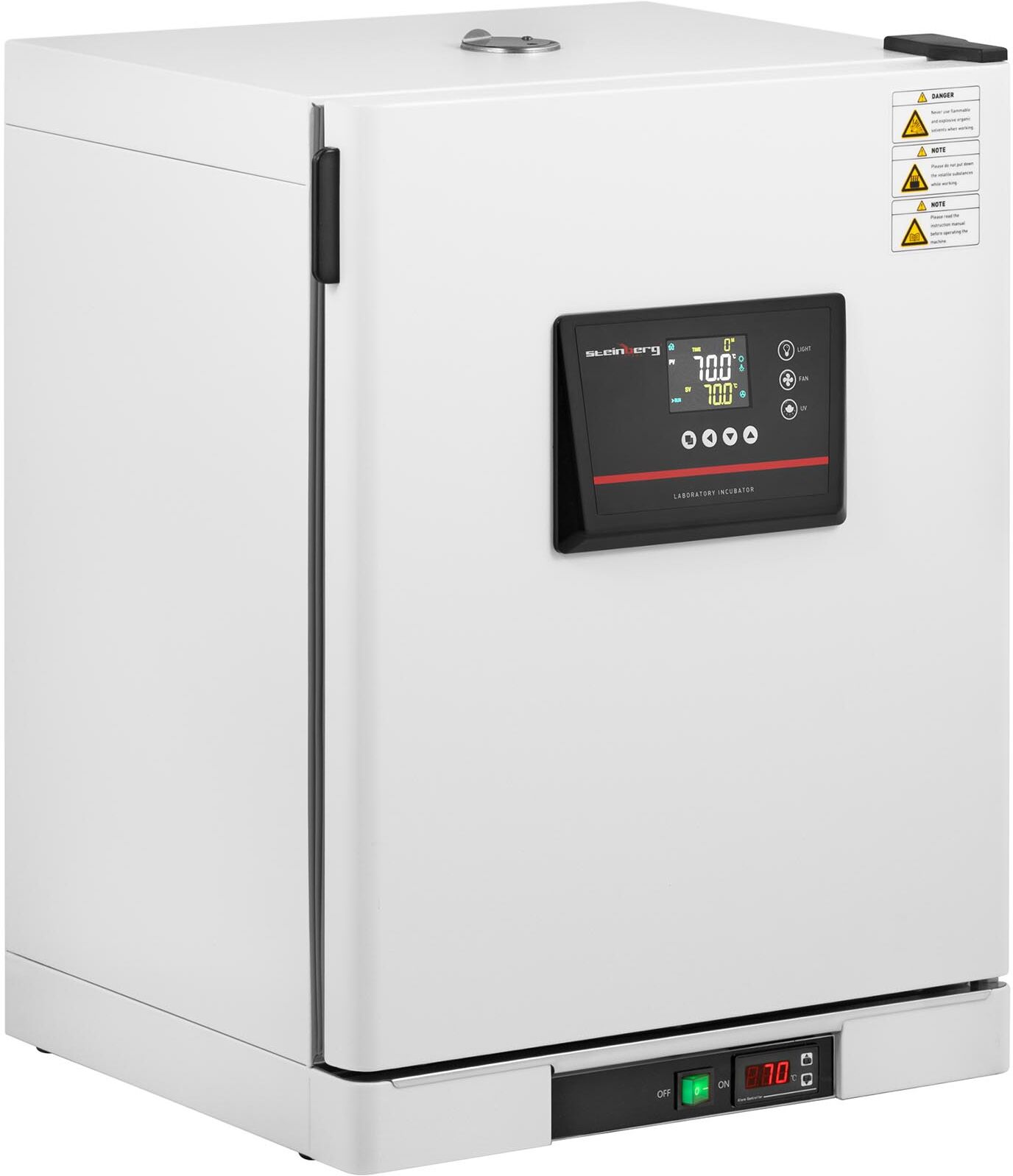
Steinberg Systems Laboratory Incubator - up to 70 °C - 65 L - air circulation SBS-LI-65Microorganisms, cell cultures and seedlings have one thing in common: They need steady temperatures in order to develop optimally in the laboratory. This is ensured by the SBS-LI-65 laboratory incubator from Steinberg Systems. With the optimal temperature control and a robust casing, it is a reliable aid that can be used easily and effectively. The laboratory incubator ensures optimal conditions with the help of PID programs, which can be set via the touch control panel and the LCD display can be checked. It has functions such as time and temperature setting, overtemperature protection, timer and automatic switch-off. The temperature control precisely maintains the set temperature between ambient temperature + 5 - 70 °C for the set time of 0 - 9,999 min, which is continuously checked by sensors and automatically corrected in case of deviations. As a result, the laboratory incubator maintains temperatures with an accuracy of ± 1.5 °C. The temperature is distributed very evenly in the interior via a recirculation system to prevent temperature fluctuations. The temperature can be independently limited on the digital display. In addition, the unit has a sterilisation function using UV light. The door to the spacious interior is hermetically sealed with a silicone rubber seal and thus ensures minimal temperature loss during the incubation of cultures or bacteria. The tempered glass window is just as heat-resistant and you can keep an eye on the interior. The interior is made of stainless steel and is therefore extremely easy to care for and insensitive to corrosion or other environmental influences. With a capacity of 65 L, the cell culture incubator is very compact and can be used in tight spaces. Because of the height-adjustable inserts, the interior can be used optimally and adapted to different samples or cultures. The casing is made of sturdy, rolled steel with an electrostatic coating, which makes the outer shell extremely durable. As a result, the lab incubator can withstand heavy loads and can be cleaned effortlessly.629,00 £*Shipping: 0,00 £Secure redirect to the provider
-
Inspired Deals Portable Mini Alcohol Lamp Metal Alcohol Burner For Camping And Laboratory Use Portable Mini Alcohol Lamp Metal Alcohol Burner For Camping And Laboratory UseBring reliable heat wherever you need it with this mini alcohol lamp designed for both outdoor adventures and precision tasks. Whether you're a camper, hobbyist, or student, this compact portable alcohol burner delivers a steady flame in a...39,97 $*Shipping: 0,00 $Secure redirect to the provider
-
Why water bath?
A water bath is used in scientific experiments and cooking for several reasons: 1. Temperature control: Water has a high specific heat capacity, meaning it can absorb and retain heat well. This makes it an ideal medium for maintaining a constant temperature during an experiment or cooking process. 2. Gentle heating: Water bath provides a gentle and uniform heat source, which is important for delicate samples or ingredients that may be sensitive to high temperatures. 3. Prevents evaporation: By using a water bath, the water can act as a barrier to prevent evaporation of the sample or ingredients being heated. 4. Safety: Using a water bath can help prevent direct contact between the heat source and the sample, reducing the risk of overheating or burning. Overall, a water bath is a versatile and effective tool for maintaining precise temperatures and ensuring consistent results in various scientific and culinary applications. **
-
How can one create a water bath without a water bath container?
To create a water bath without a water bath container, you can use a regular cooking pot or a baking dish as the outer vessel. Fill it with water to about halfway up the sides of the dish you are using to hold the items you want to heat gently. Place a kitchen towel or a silicone trivet at the bottom of the pot to prevent direct contact between the dish and the heat source. This makeshift water bath can be used for tasks like melting chocolate, making custards, or gently heating delicate sauces. **
-
How is the bath water made blue?
The bath water is made blue by adding a water-soluble dye or coloring agent to the water. These dyes are specifically designed to be safe for use in bath water and will not stain the skin or tub. The amount of dye added can be adjusted to achieve the desired shade of blue. Additionally, some bath products, such as bath bombs or bubble bath, may contain blue coloring agents that dissolve in the water, turning it blue. **
-
How is the bath water turned blue?
The bath water is turned blue by adding a blue-colored bath bomb or bath salts to the water. These products contain dyes or pigments that dissolve in the water, creating the blue color. As the bath bomb or salts fizz and dissolve, they release the colorant into the water, transforming it into a vibrant blue hue. **
Similar search terms for Steinberg-Laboratory-Water-Bath
-
How do I create a water bath?
To create a water bath, you will need a large baking dish or roasting pan that is big enough to hold the dish you want to cook in. Place the dish in the baking dish and fill the baking dish with hot water until it reaches about halfway up the sides of the dish you are cooking in. Then, carefully transfer the baking dish to the oven and proceed with your recipe as directed. This gentle, indirect heat will help to cook delicate dishes like custards and cheesecakes evenly and prevent them from curdling or cracking. **
-
How can one produce water in a laboratory?
Water can be produced in a laboratory through a process called synthesis, where hydrogen and oxygen gases are combined in the presence of a catalyst to form water. This can be achieved by passing an electric current through water to separate the hydrogen and oxygen, and then collecting and combining the gases to form water. Another method is to react a metal with water to produce hydrogen gas, and then ignite the hydrogen to react with oxygen in the air to produce water. These methods demonstrate how water can be produced in a controlled laboratory setting. **
-
How do you bake in a water bath?
To bake in a water bath, also known as a bain-marie, you will need a baking dish and a larger pan. Place your filled baking dish inside the larger pan and then carefully pour hot water into the larger pan, making sure the water level reaches about halfway up the sides of the baking dish. This gentle and indirect heat helps to ensure even cooking and prevents the edges of your dish from overcooking. Bake your dish in the water bath according to the recipe instructions. **
-
How do I best create a water bath?
To create a water bath, you will need a baking dish or pan large enough to hold the dish you are cooking in. Fill the baking dish with hot water, about halfway up the sides of the dish you are cooking in. Place the baking dish with water and the dish you are cooking in inside a preheated oven. The water bath will help regulate the temperature and create a gentle, even heat around the dish you are cooking, which is especially useful for delicate dishes like custards or cheesecakes. **
* All prices are inclusive of VAT and, if applicable, plus shipping costs. The offer information is based on the details provided by the respective shop and is updated through automated processes. Real-time updates do not occur, so deviations can occur in individual cases. ** Note: Parts of this content were created by AI.